What is an Anti-Social Behaviour Order?

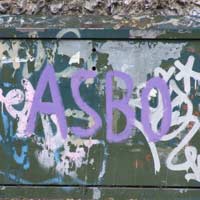
Many of us are now familiar with the term Anti-Social Behaviour Order, but what is it designed to do and under what circumstances is an ASBO issued?
An Anti-Social Behaviour Order (ASBO) is a legally binding agreement between a person or persons who have committed acts of anti-social behaviour and the police. Originally implemented as part of section 1 of the Crime and Disorder Act 1999, ASBOs are designed to reduce the likelihood that an individual will reoffend. ASBOs can be issued to adults and children as young as 10 years old.
What Constitutes Anti-Social Behaviour
Anti-social behaviour can be any act that causes a nuisance or disturbance to those living in and around a surrounding area. Such acts of anti-social behaviour can take on many different forms and the list that follows is a comprehensive – but not exhaustive list – of the events which can be considered anti-social activities:- Graffiti
- Vandalism
- Destruction of private or public property
- Using intimidating verbal language
- Using intimidating body language in a threatening manner
- Causing excessive noise, especially during the hours of 11.00pm and 7.00am
- The consumption of alcohol of drugs in a public area
- Selling or dealing drugs in a public area
- Litter and fly-tipping
- Setting off fireworks late at night
Issuing an Anti-Social Behaviour Order
An ASBO will be issued if the individual in question is charged and taken before a magistrate. At this time a magistrate – who may also hand down a sentence of community service or a fine – will instigate proceedings to have an ASBO put in place. This agreement must be met on all counts by the individual and failure to do so can constitute a break in the agreement, which in itself is considered to be a criminal offence.The issuing of such an order can also come with a curfew which states that the individual must not be in or around a particular area after a designated time in the evening.
The ASBO may also determine that an individual must not have contact with a designated number of individuals, all of whom can be issued with ASBOs themselves if there is a degree of certainty that they will cause further anti-social behaviour as a group.
Such a break in the conditions as laid down by a magistrate can result in the individual being returned to court where a harsher punishment may be imposed. In some cases, the punishment may include a custodial sentence to be served in a Young Offenders institution if the individual is not old enough to qualify for time to be spent in the adult prison system.
For more information about Anti-Social Behaviour Orders, contact your local Youth Offending Team or community police officer.
Business Energy With a Difference
If you are looking for business energy or need advanced solutions like remote energy monitoring, new supplies, downgrading or upgrading capacity, have a no obligation chat with Purely Energy.
To find our more get in touch here. or call 0161 521 3400.







Re: Can we Stop Our Father's Visitation Rights to See Us?
TO RECOVER MY STOLEN BITCOIN? CONSULT WEB BAILIFF CONTRACTOR Investment is always aimed at…
Re: Can we Stop Our Father's Visitation Rights to See Us?
When I suspected my ex-boyfriend of cheating, I reached out to Crypto Pandemic Hunter for help. At…
Re: Can we Stop Our Father's Visitation Rights to See Us?
ARE YOU A VICTIM OF CRYPTOCURRENCY INVESTMENT OR NFT SCAM? SCHEDULE A MEETING WITH AN ETHICAL…
Re: Your Rights as a Grandparent
HOW I WAS CURED FROM HERPES VIRUS I am writing this testimonial with immense gratitude and a renewed sense of hope in my heart.…
Re: Your Rights as a Grandparent
HOW I WAS CURED FROM HERPES VIRUS I am writing this testimonial with immense gratitude and a renewed sense of hope in my heart.…
Re: Accessing Your Child's Medical Records: Your Rights
HOW I WAS CURED FROM HERPES VIRUS I am writing this testimonial with immense gratitude and a…
Re: Accessing Your Child's Medical Records: Your Rights
Hello everyone my names are ALEX JACKSON from the UK, I want to use this golden medium to appreciate…
Re: Do I Have the Right to Know Where My Children Are?
REAL LOVE SPELL CASTER Hello everyone my names are ALEX JACKSON from the UK, I want to use this…
Re: Do I Have the Right to Know Where My Children Are?
HOW I GOT MY EX LOVER BACK Hello everyone my names are ALEX JACKSON from the UK, I want to use this…
Re: Should we Still Pay Maintenance?
I was diagnosed of herpes in 2019 and I tried all possible means to get cure but all to no avail until i saw a post in a…